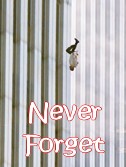
Most of the media is ignoring the 17th anniversary of September 11th, with, at best, some tiny little stories, or yammering on like Charles Lane, which is one of 3 web front page pieces, the 2nd which features iconic pictures, the third which kinda goes after Trump. There are a few unhinged op ed pieces, like Excitable Joe Scarborough using 9/11 to attack Trump. He needs to leave the GOP, he’s as wacko as Bernie Sanders and Corey Booker
We expected the war on terror to unite us. What went wrong?
 Seventeen years ago, Osama bin Laden’s terrorist minions, using hijacked passenger planes as weapons, killed 2,977 people in a single awful raid on the United States. The al-Qaeda attack horrified and angered the nation — but also caused Americans to rally together as they had not done since Pearl Harbor.
Eighty-two percent of Americans spontaneously displayed the flag in the days just after the Sept. 11, 2001, attacks, according to a Gallup poll. Some 150 members of Congress from both parties gathered on the Capitol steps and sang “God Bless America.†Soon thereafter, a huge bipartisan majority voted to give President George W. Bush near carte blanche authority to wage a retaliatory “war on terror.â€
In January 2001, 55 percent of the public described themselves as “extremely proud†to be American, according to Gallup; after what were widely understood as murderous attacks on U.S.-style freedom itself, that number surged, reaching 70 percent by June 2003. (snip)
Obviously, it has not worked out that way. Gone, long gone, are the singing, flag-waving and bipartisanship of the 9/11 aftermath. In their place, we have a polarized, hate-filled political climate often, and not inaccurately, described as a “cold civil war.†In July, Gallup found that only 47 percent of the public is still “extremely proud†to be American.
The majority of those are Democrats. Only 32% were extremely proud, versus 74% of Republicans.
Bush deserves blame for the politicized manner in which he and his team pursued the conflict, staking out extreme positions on, say, denying Geneva Convention protections to captive terror suspects, then denouncing critics as insufficiently committed to victory.
Yet divisions over the conduct of prolonged irregular warfare were bound to intensify sooner or later, as they did during the Vietnam War. By its nature, such a conflict breeds difficult policy dilemmas, and democracy, by its nature, processes such controversies through partisan conflict.
Of course, Blame Bush, rather than those, who were mostly Democrats, who quickly turned and started attacking him, who came up with the insane 9/11 Truth conspiracy theories, who claimed that Bush either let 9/11 happen or made it happen. Who decided that any attacks on Islamic radical terrorists was an attack on all Muslims, and started yammering about Islamophobia. Who seemed to care more about protecting those jihadis than Americans. Who cared more about some captured jihadis (who are actually mostly not protected by the Geneva Convention) than Americans having their heads sawed off. How were just unhinged still that Bush won the 2000 election (then the 2004) so had to be against everything he was for.
It’s also not unusual, since these same people hate America, so they take the side of the jihadis.
Read: Washington Post: George Bush Is To Blame For Not Uniting Us After 9/11 »


 HurricaneÂ
Hurricane 


 In the days after Sept. 11, 2001, the United States set out to destroy Al Qaeda. President George W. Bush vowed to “starve terrorists of funding, turn them one against another, drive them from place to place, until there is no refuge or no rest.â€
 Authors like to flatter themselves by imagining for their work an “ideal reader,†a cherubic presence endowed with bottomless generosity, the sympathy of a parent, and the wisdom of, well, the authors themselves. In Carbon Ideologies, William T. Vollmann imagines for himself the opposite: a murderously hostile reader who sneers at his arguments, ridicules his feeblemindedness, scorns his pathetic attempts at ingratiation. Vollmann can’t blame this reader, whom he addresses regularly throughout Carbon Ideologies, because she lives in the future, under radically different circumstances—inhabiting a “hotter, more dangerous and biologically diminished planet.†He envisions her turning the pages of his climate-change opus within the darkened recesses of an underground cave in which she has sought shelter from the unendurable heat; the plagues, droughts, and floods; the methane fireballs racing across boiling oceans. Because the soil is radioactive, she subsists on insects and recycled urine, and regards with implacable contempt her ancestors, who, as Vollmann tells her, “enjoyed the world we possessed, and deserved the world we left you.â€